Love for Horses - Sultan-ul-Ashiqeen's Stable
Following the Sunna of Prophet Mohammad - Maintaining a Stable for Allah's Pleasure
Islam honours horses and raising these noble creatures has been encouraged by Saints and perfect Fakirs. In the Quran, Allah has sworn upon horses in sura Al-Adiyat. Several Hadiths offer profound insight into the significance of keeping horses.
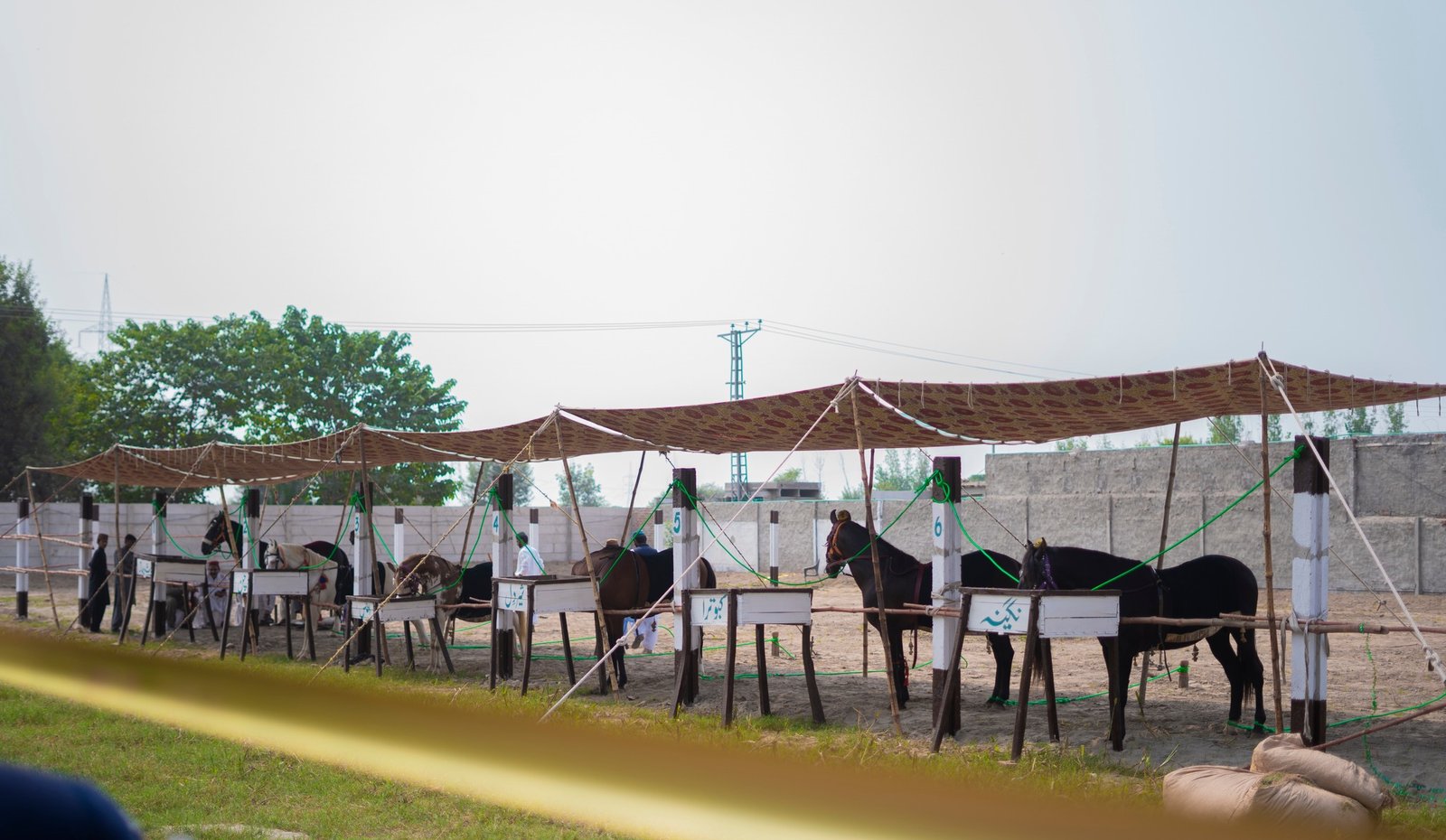
Due to the abundance of Hadiths emphasising the honour of horses and serving them, Sultan-ul-Ashiqeen holds a deep affection for these noble creatures. Soon after Khanqah Sultan-ul-Ashiqeen and Masjid-e-Zahra were established, Sultan-ul-Ashiqeen, in line with the Sunna of Prophet Mohammad, decided to maintain a stable of horses.
QURANIC AND HADITH BASIS
Arab nobles and tribal chiefs used to personally serve and honour horses. They did not delegate these tasks to servants or slaves. The wise among the Arabs used to say that there is no shame for the tribal chief and noble in performing three tasks i.e. serving his father, guest and a horse.
Whenever he visits the stable, he takes keen interest in the well-being of the horses. He enquires about their health and needs, asks about their feeding schedule and addresses any other concern that may arise. Furthermore, he frequently imparts valuable guidance to his disciples who are appointed to take care of the horses, emphasising that these horses are maintained solely for the pleasure of Allah, not out of personal desire.
THE NOBLE HORSES OF SULTAN-UL-ASHIQEEN
SHAHBAZ
"The worth and value of a ride is determined by its rider." - Ibn Qayyim (Zad al-Ma'ad)
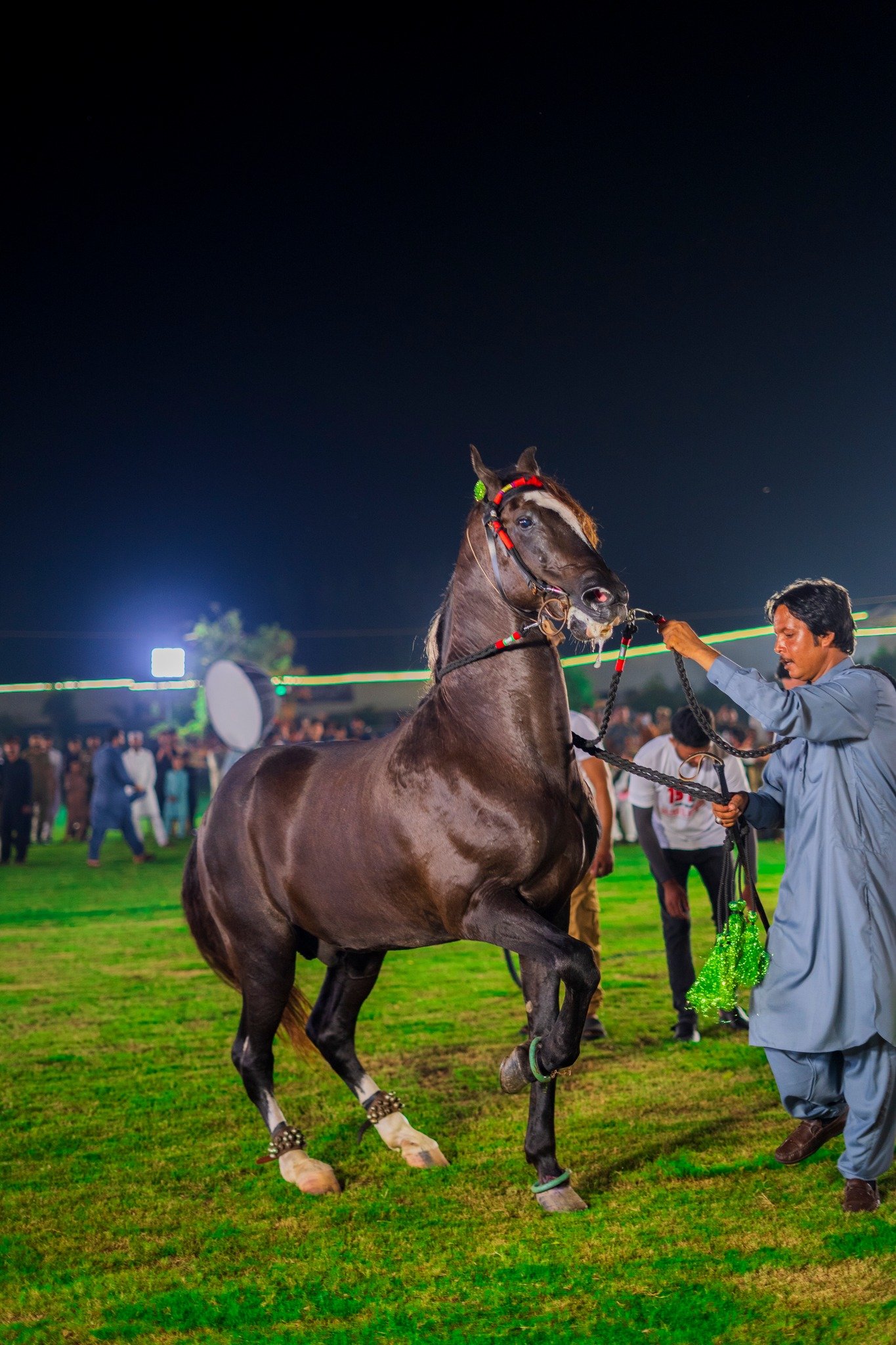
This horse is the epitome of magnificence and beauty. It boasts a lustrous black coat adorned with a striking white mark on its forehead. This characteristic is often referred to as a 'blaze'. Shahbaz, in all its splendour, possesses remarkable intelligence. It swiftly comprehends any instruction imparted to it, and once a particular action is forbidden, it refrains from repeating it.
Shahbaz's ears are a marvel to behold – pointed and gracefully poised. Its neck is relatively longer than the average horses and enhances its overall grace. Remarkably, when Sultan-ul-Ashiqeen caresses Shahbaz's forehead, the horse instinctively draws nearer which is a silent expression of its affection towards him.
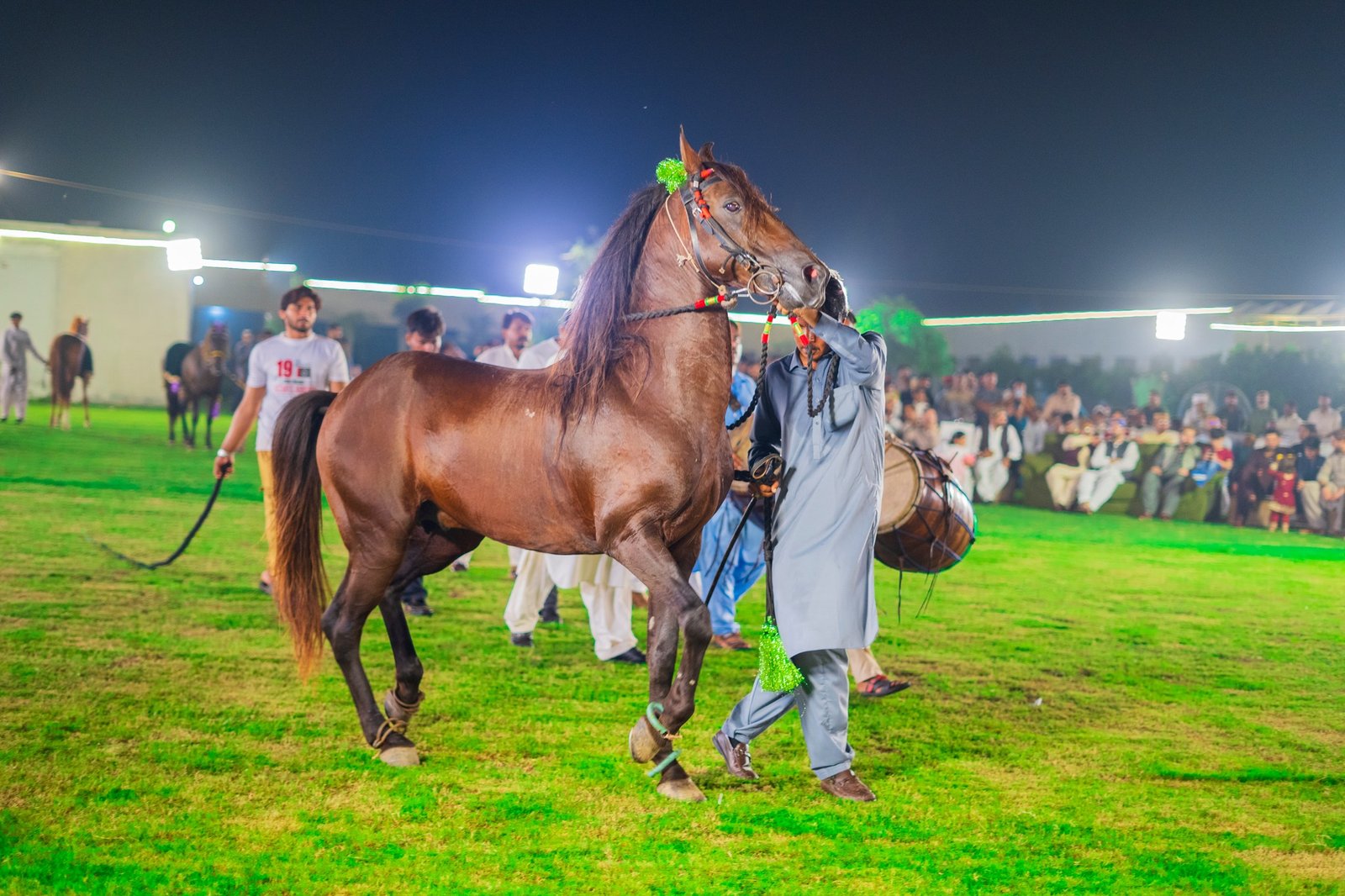
KABOOTRA
This horse is an embodiment of equine nobility and boasts a distinctive and captivating appearance. Its coat is a mesmerising shade of reddish-black. This unique hue has earned it the endearing nickname Teelia Mashka, drawing parallels to the colour of precious oils.
The most distinguishing feature of Kabootra is that on its right shoulder there is a pattern resembling Ism-e-Mohammad. It possesses a remarkable quality that sets it apart–an unwavering commitment to cleanliness. This discerning horse refuses to occupy soiled spaces and avoids standing in dirty areas, reflecting its innate sense of dignity and refinement.
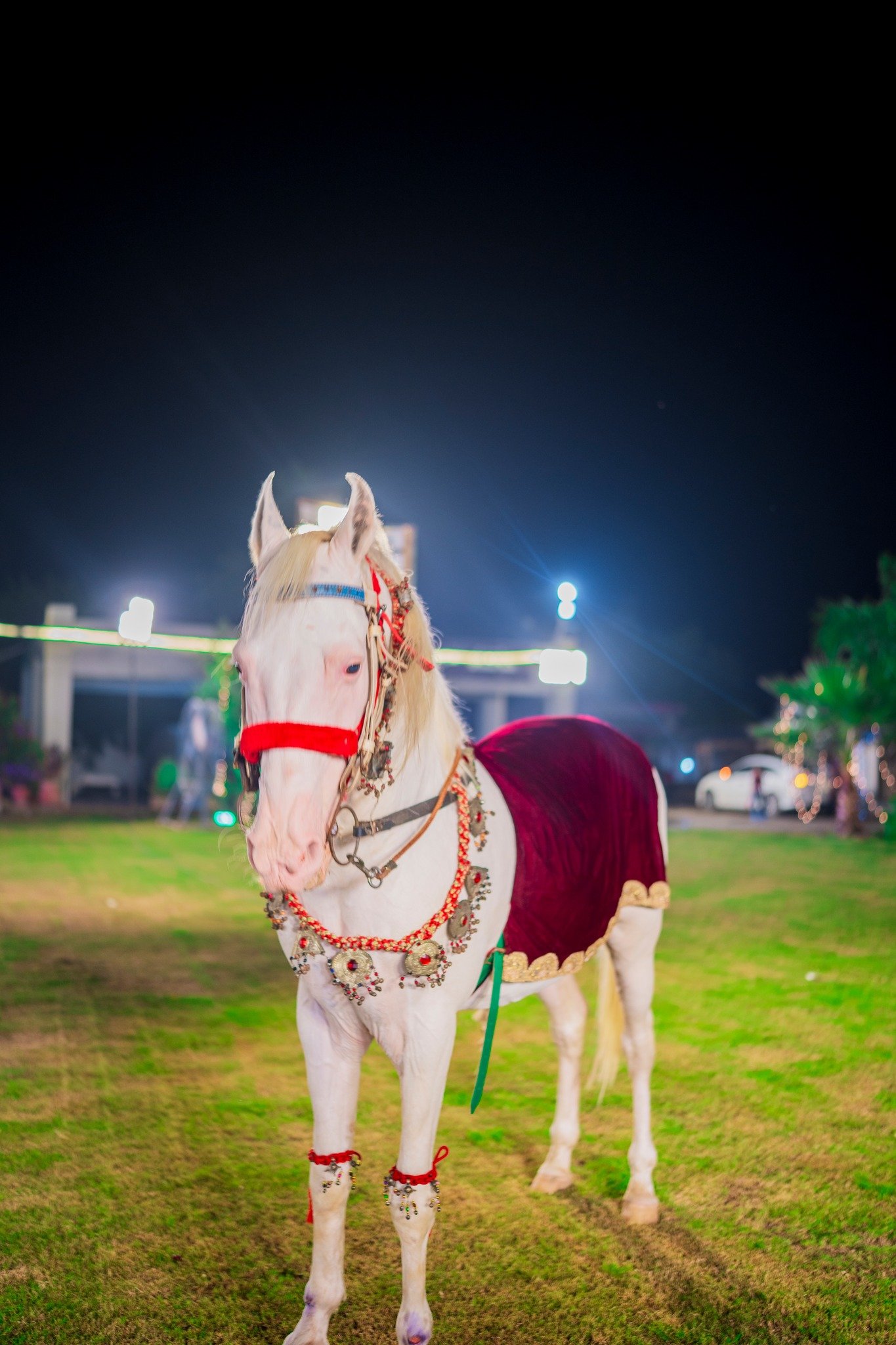
CHAN
Chan is a splendid white horse with pristine snow-white coat and a silver mane. This majestic horse boasts a gracefully slender tail, a characteristic often associated with horses of exceptional beauty. Notably, Chan's chest is impressively broad, an exclusive trait that sets it apart as an exquisite specimen among horses.
A distinguishing feature of Chan is the delicate pinkish hue around its eyes and nose, a testament to its pure lineage. Connoisseurs of equine beauty often admire its ears, appreciating their shorter distance from each other compared to those of other horses, lending Chan an added touch of elegance.
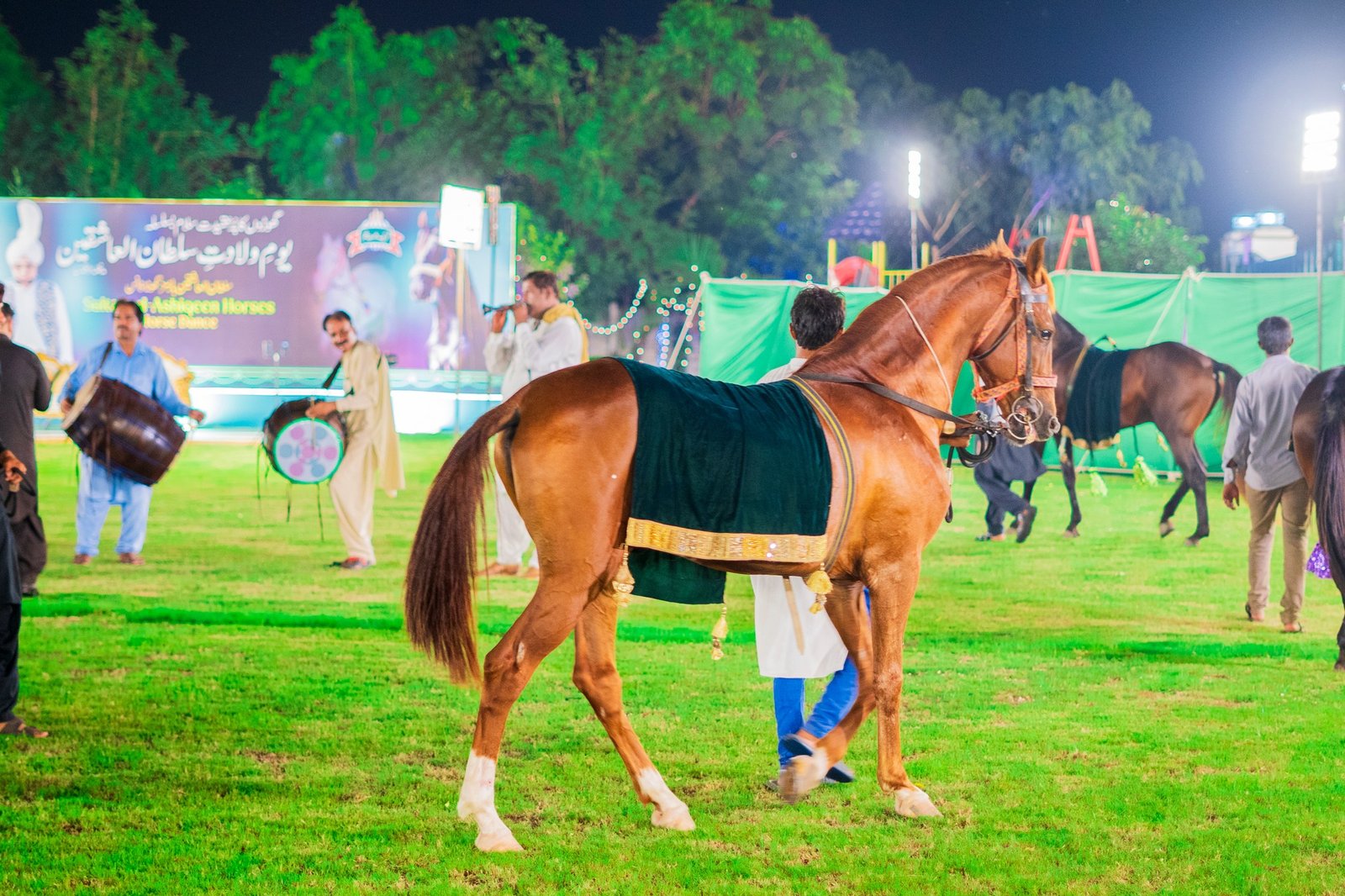
SHER DIL
This bay-coloured horse is courageous and brave. It is often said about horses, "No hoof, no horse" which emphasises the importance of robust hooves in assessing a horse's quality. A glance at Sher Dil's hooves reveals their strength and well-shaped structure.
Sher Dil's swiftness is remarkable that often makes it challenging for even the most seasoned riders to control it. Also, it has large nostrils which are a valuable asset for a horse as it ensures that it does not tire easily while running in a competition.
Whenever Sultan-ul-Ashiqeen visits the stable, Sher Dil keenly takes notice. It repeatedly turns its gaze towards him, lifting its right hoof and rhythmically tapping the ground as if conveying a message that it has recognised Sultan-ul-Ashiqeen's presence.
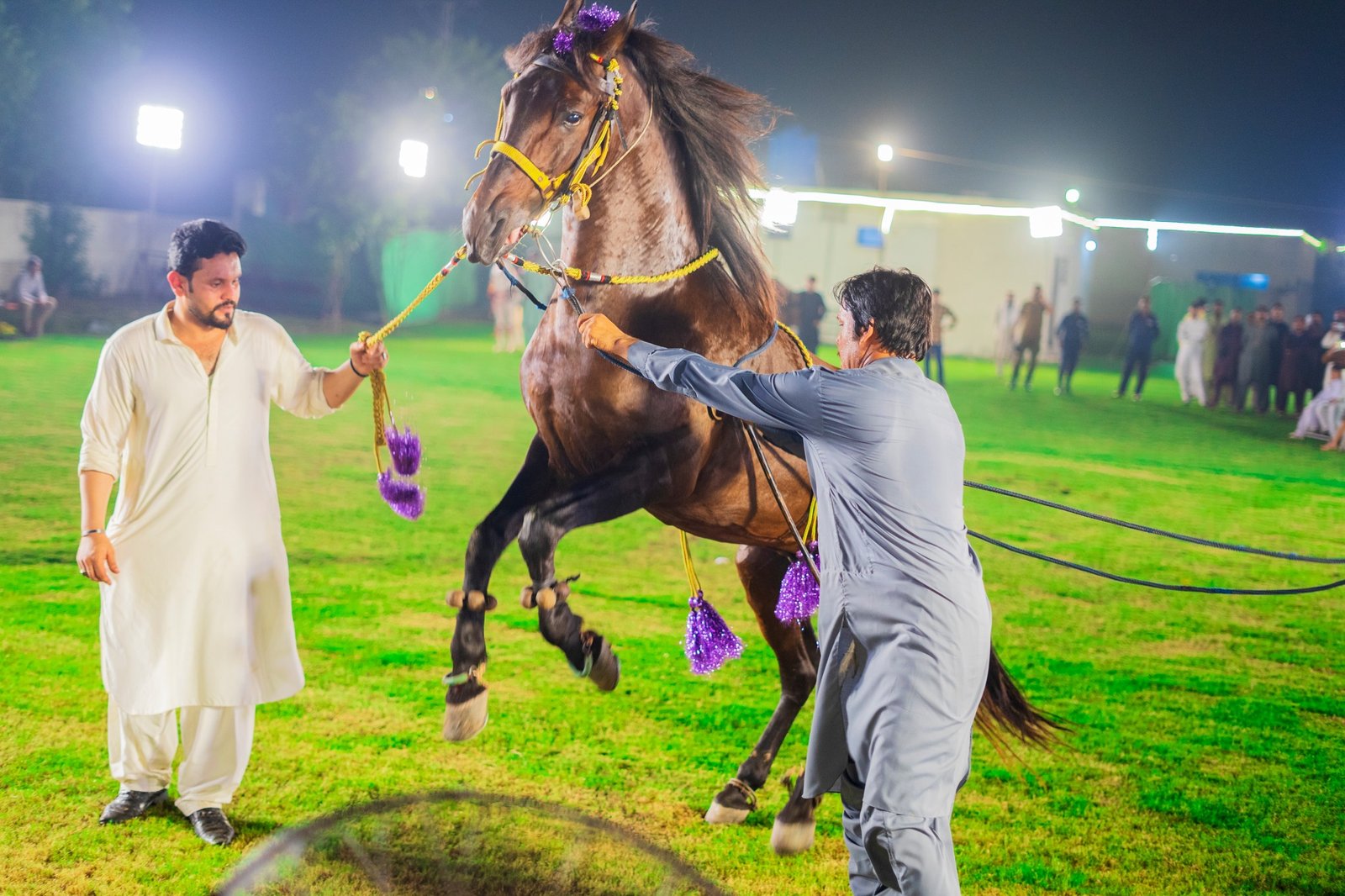
NAGEENA
Nageena is a beautiful horse. From head to hoof, its entire body exudes a rich, glossy black hue. An elegant and flowing mane further enhances its allure. Horses with luxuriously long tails are revered, and Nageena proudly flaunts this feature.
Additionally, its large, expressive eyes are yet another hallmark of a truly beautiful equine specimen. The combination of its deep black color, flowing mane, and graceful tail makes Nageena a standout beauty in Sultan-ul-Ashiqeen's stable.
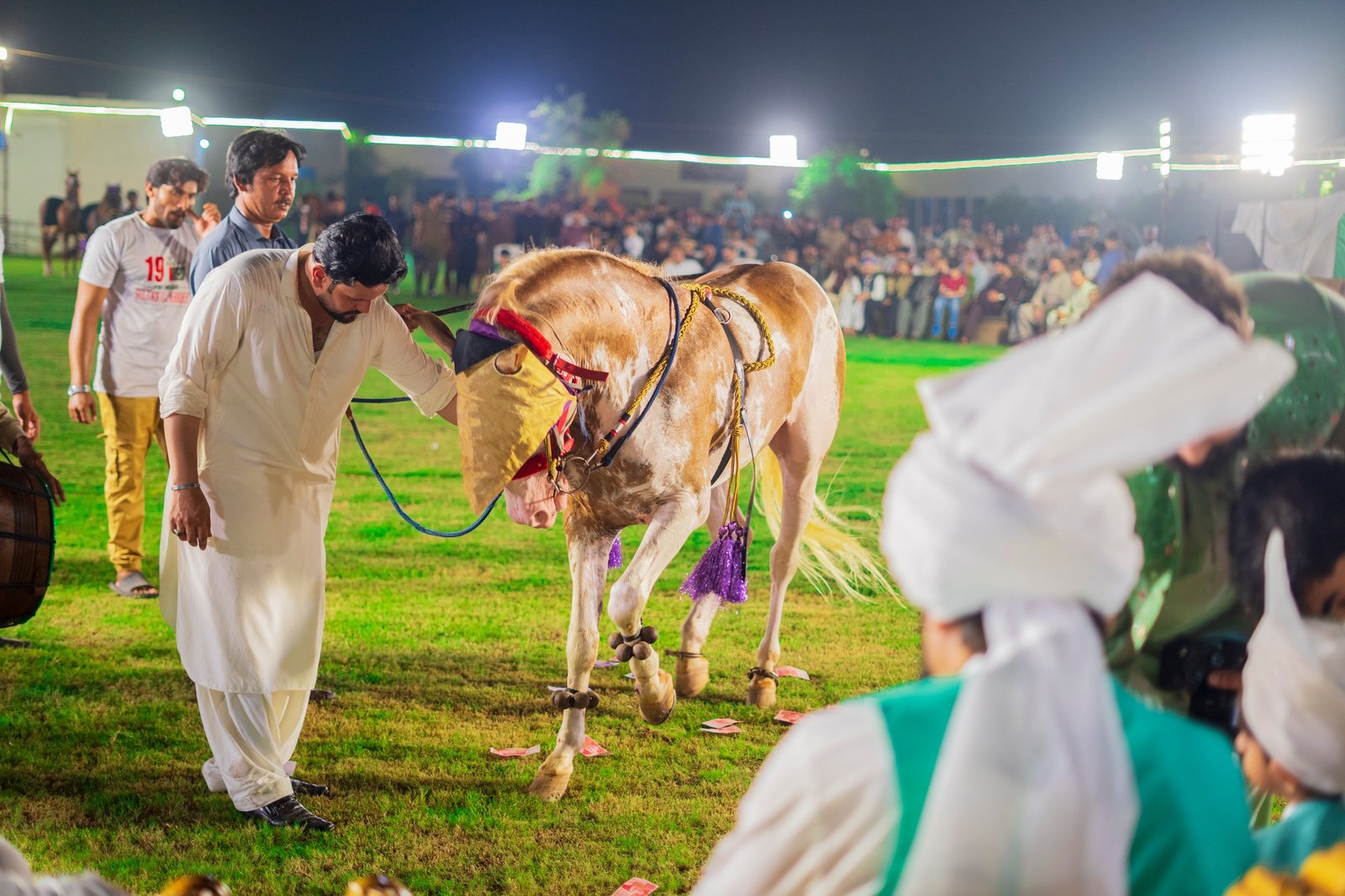
ATLAS
In terms of colour, Atlas presents a captivating two-tone palette, skillfully blending white and bay shades. This harmonious combination contributes to its undeniable beauty. Remarkably, Atlas boasts slender hooves and finely structured legs, characteristics that epitomise equine elegance.
Its four white legs provide a striking contrast, rendering Atlas exceptionally eye-catching in appearance. Beyond its visual appeal, Atlas is a skilled dancing horse, adept at performing captivating longori and jhumar dances. This horse holds special significance as it was the first horse gifted to Sultan-ul-Ashiqeen.
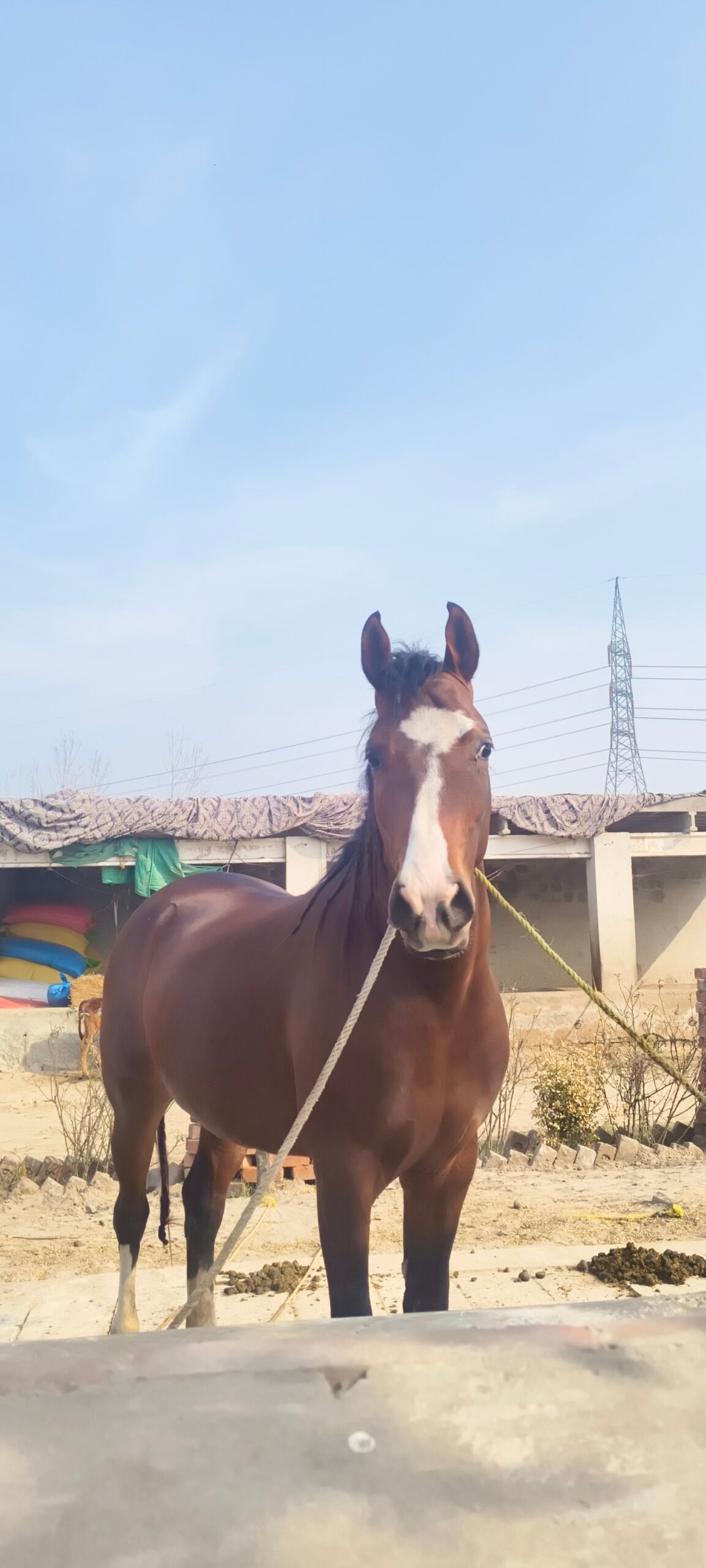
GULFAM
It has big and beautiful eyes. Three of his feet are white that have a black shade near the ankles merging into his brown body. His forehead is marked with a white strip that adds to his beauty. The inner part of his lower lip has an ingrown pattern that seems similar to the name of Allah اللّٰہ.
Gulfam exactly matches the description of best horse mentioned in the Hadith. This horse is a perfect example of the noble characteristics praised by the Holy Prophet.
LAILA
A beautiful golden mare with white stockings and a bold blaze. It is a pure breed mare from Kasur belt. Laila is very loving and obedient, with no tantrums at all.
Sultan-ul-Ashiqeen's grandchildren love to ride all the horses especially Laila as it carries them with utmost care and affection. This beautiful mare adds to the diversity and beauty of Sultan-ul-Ashiqeen's stable.
Sultan-ul-Ashiqeen loves every creation of Allah and is especially kind towards the animals. In Khanqah Sultan-ul-Ashiqeen, he has kept many pet animals and birds including pigeons, parrots, hens, roosters, peacocks, rabbits etc. Large cages are made for them in the beautiful lawn of Khanqah Sultan-ul-Ashiqeen.
Adjacent to the stable of horses, there is a small farm for keeping cows, buffalos and goats. Sultan-ul-Ashiqeen keenly watches over the well-being of all the animals kept in the Khanqah, ensuring they receive proper care, nourishment, and treatment.
Note
This article is translated from Urdu biography of Sultan-ul-Ashiqeen. All horses are kept solely for the pleasure of Allah and following the Sunna of Prophet Mohammad.
LEARN MORE ABOUT THIS DIVINE TRADITION
Spiritual Significance of Horses
To learn more about the Islamic perspective on horse keeping and Sultan-ul-Ashiqeen's implementation of this Sunna, visit the official resources:
For detailed biography and publications:
Sultan-ul-Faqr Publications